The $100 Trap: Why 'Cheap' Leather is a Financial Disaster
The Illusion of the Bargain
We've all seen them: the $149 leather jackets in mall showrooms. They look shiny, mereka feel smooth, and they smell... well, like chemicals. For the budget-conscious consumer, it feels like a win. But in the world of leather, Cheap is Expensive. A budget jacket is a ticking time bomb of peeling finishes and failed seams. Here is why the $100 trap is a bad investment.
1. The 'Corrected-Grain' Cover-Up
Cheap jackets use "Corrected-Grain" leather. These are hides with so many scars and insect bites that they are unusable in their natural state.
- The Fix: The manufacturer sands off the top layer (removing the strength) and presses a fake "Leather Pattern" into the surface using plastic polymers.
- The Failure: Because the protective top grain is gone, the plastic coating eventually cracks and peels. This is not repairable. Your jacket doesn't "age"; it just dies.
2. The 'Genuine Leather' Branding Lie
In most industries, "Genuine" means "The Real Thing." In the leather industry, it is a technical term for The Third Grade of hide.
- What it really is: It is made by splitting the hide and using the weak, fibrous bottom layers. It is then bonded with glue and finished with paint. It has zero structural integrity.
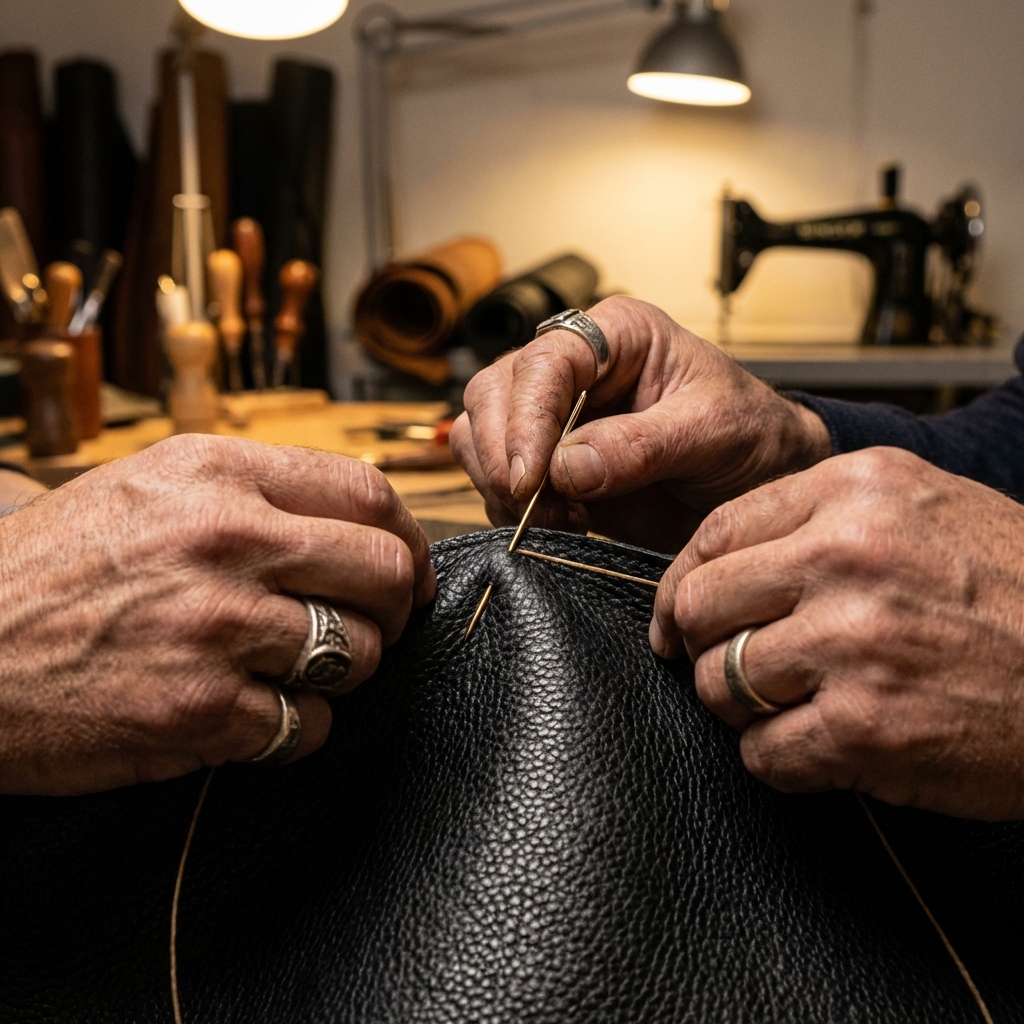
- The IndiFash Standard: We only use Full-Grain and Top-Grain. We believe that if you're buying leather, you should be buying the strongest part of the hide, not the scraps.
3. The Math of Disposability
Let's look at the 10-year cost of ownership.
- Budget Jacket: $150. Lasts 18 months. Total cost over 10 years (6.6 replacements) = $990.
- IndiFash Jacket: $499. Lasts 20 years. Total cost over 10 years = $250.
Conclusion
Don't be seduced by the entry-level price. You aren't buying a leather jacket; you're buying a plastic imitation that happens to have a hide underneath. Build a wardrobe of permanence, not one of replacement.
Escape the trap. See the Full-Grain Reality.