The Proportional Mathematics of the Cropped Leather Jacket
Short jacket, long legs. We explore the geometry of the cropped biker and show you how to use its hemline to transform your body's proportions instantly.
1. Foundations of Material Science and Heritage Craftsmanship
The pursuit of exceptional the proportional mathematics of the cropped leather jacket begins with a fundamental appreciation for raw hide architecture, collagen fiber density, and time-honored tanning methods. In an era dominated by synthetic fast fashion and short-lived consumer goods, genuine full-grain leather represents an uncompromising stand for timeless durability, aesthetic elegance, and functional utility.
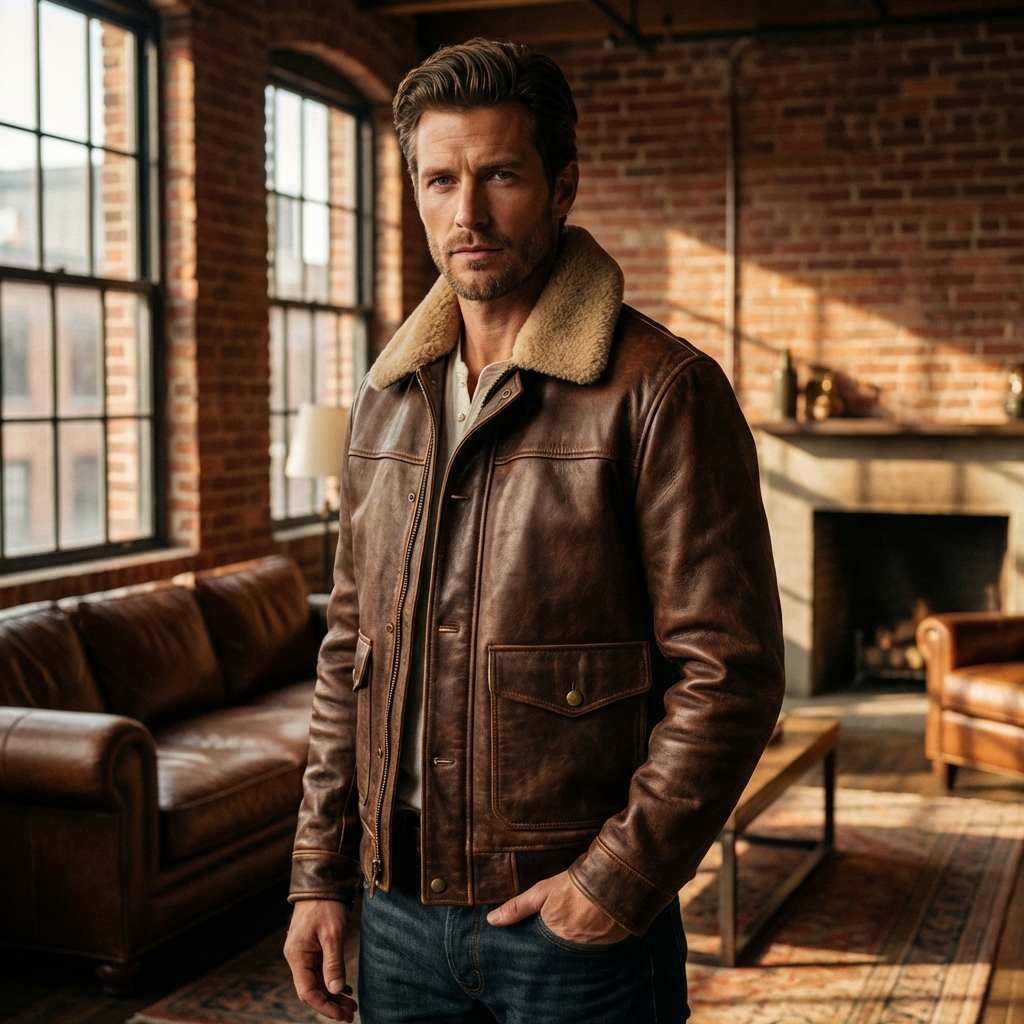
Style is essentially an optical illusion. The human eye uses "Anchor Points" to determine where one part of the body ends and another begins. The Cropped Leather Jacket is the most powerful tool for manipulating these points. By raising the hemline above the hips, you effectively "trick" the observer into thinking your torso is shorter and your legs are significantly longer. At IndiFash, we design our cropped series (The 'Aero' Collection) with a tapered waist to maximize this effect. Here is the mathematics of the crop.
When selecting materials for the proportional mathematics of the cropped leather jacket, master artisans evaluate the hide's natural grain structure. Full-grain hides—retaining the unblemished uppermost epidermal layer—possess the highest density of cross-linked protein fibers. This structural integrity prevents tearing, resists moisture penetration, and gives full-grain leather its signature ability to conform to the user's body over years of continuous wear.
"True luxury hides do not conceal their history under synthetic coatings; they embrace natural grain markings and transform everyday wear into a rich, personal patina."
Collagen Interlock Density and Hide Weight Selection
Tanning hides are measured by weight in ounces per square foot or thickness in millimeters. Apparel garments require supple 1.1mm to 1.3mm (2.5oz to 3.0oz) full-grain lambskin or lightweight calfskin to guarantee fluid drape and unrestricted body movement. Conversely, heavy utility goods—such as professional chef aprons, tool holsters, and structured travel duffels—utilize 1.6mm to 2.2mm (4.0oz to 5.5oz) steerhide or vegetable-tanned cowhide.
Hardware Integration, Rot-Proof Thread, and Stress Points
The longevity of any leather creation depends equally upon its supporting hardware. Premium leather outerwear and accessories feature solid cast brass or stainless steel buckles, heavy-gauge YKK Excella zippers, and bonded multi-ply polyester thread resistant to UV degradation and mold. High-tension anchor zones are hand-riveted with solid copper rivets to eliminate seam popping.
Bespoke Women's Outerwear & Dresses
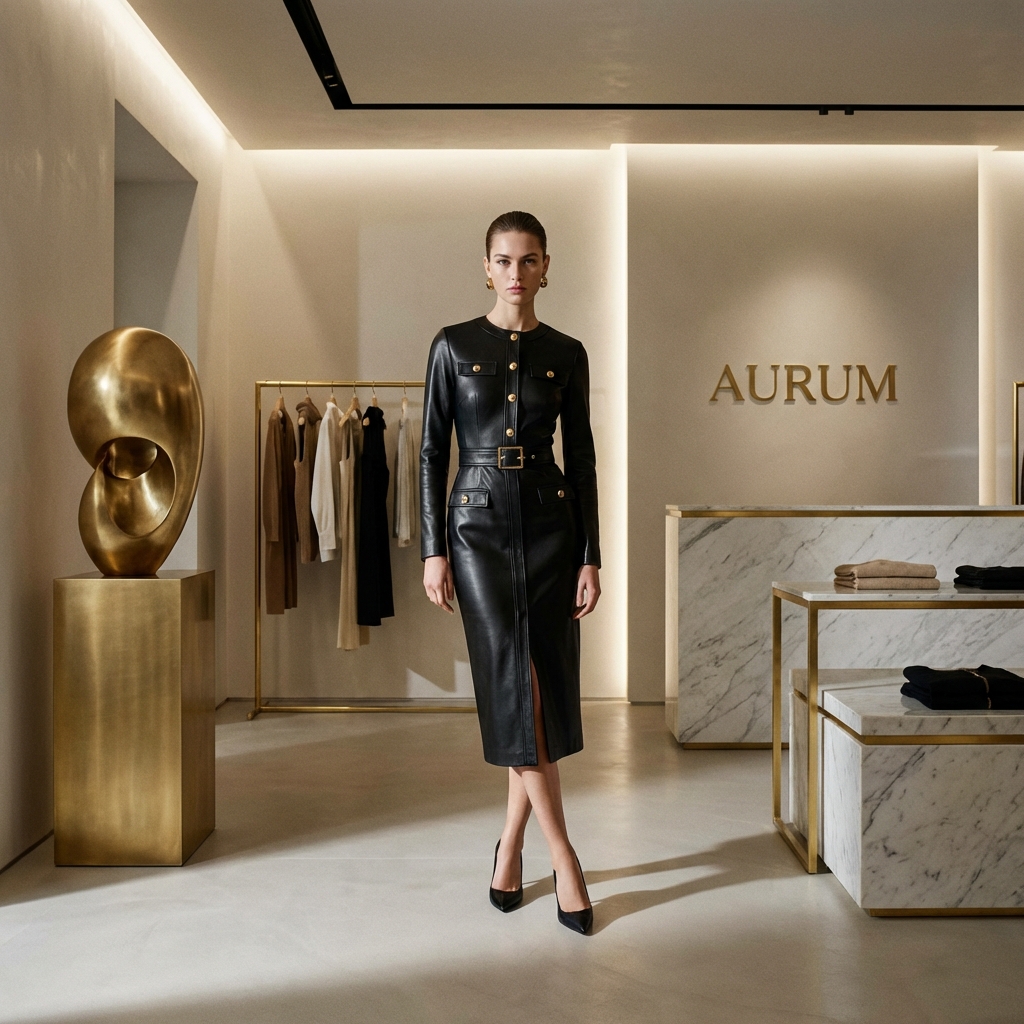
Explore fitted lambskin biker jackets, tailored leather dresses, pencil skirts, and luxury leather totes:
2. Tanning Chemistry: Vegetable Tanned vs. Chrome Tanned Hides
Understanding the chemistry behind the proportional mathematics of the cropped leather jacket requires comparing vegetable tanning with chrome tanning methods. Vegetable tanning utilizes natural tree barks, mimosa extracts, and chestnut tannins over a slow 60-day pit curing process. This organic technique yields firm, aromatic leather that ages with deep caramel patinas.
Chrome tanning, by contrast, employs chromium sulfate salts to complete tanning within 24 hours. Chrome-tanned hides exhibit superior initial softness, high water resistance, and vibrant color retention, making them ideal for modern fitted outerwear and supple accessories.
Environmental Stewardship and LWG Tannery Certification
Modern luxury leather houses mandate Leather Working Group (LWG) environmental certification for all supplier tanneries. Certified facilities enforce closed-loop water filtration systems, solar energy utilization, and 100% traceably sourced agricultural byproducts, ensuring ethical luxury production.
Structural Tensile Strength and Tear Resistance Testing
Industrial tensile testing subjects leather samples to multi-directional force. High-grade full-grain steerhide exhibits a tensile break strength exceeding 250 N/mm², easily outperforming top-grain sanded leathers or synthetic polyurethane substrates which tear under 40 N/mm² load.
3. Sartorial Integration, Styling Principles & Proportions
Integrating the proportional mathematics of the cropped leather jacket seamlessly into modern wardrobes or active work environments requires an eye for textural contrast and silhouette balance. Because full-grain leather presents a rich, structured visual texture, pairing it with complementary textiles creates depth and visual harmony.
For casual and smart-casual styling, juxtapose leather outerwear or accessories against soft natural fibers—such as heavy gauge merino wool knits, crisp Oxford cotton shirts, or raw Japanese selvedge denim. For evening or luxury aesthetics, contrast dark leather finishes with smooth silk, chiffon, or cashmere.
Color Harmony: Tan, Chestnut, Espresso, and Classic Black
Color choice sets the tone of your outfit. Classic black leather offers timeless rebellious edge; rich cognac and tan hues convey warm artisanal craftsmanship; while deep espresso brown creates understated executive sophistication suitable for formal settings.
Anatomical Fitting and Customized Bespoke Measurements
Proper leather fit accommodates natural shoulder slope, armhole movement, and chest expansion. When ordering bespoke garments, accurate measurements across chest width, sleeve length, and torso drop ensure custom precision without restricting mobility.
4. Comprehensive Step-by-Step Maintenance and Restoration Protocol
Proper environmental defense and maintenance ensure that your investment in the proportional mathematics of the cropped leather jacket remains supple and resilient for decades. Dust and dry particulate matter act as micro-abrasives that pull natural moisture from leather pores. Establish the following routine:
1. Surface Decontamination: Wipe the leather garment or accessory using a clean, soft microfiber towel slightly dampened with distilled water to sweep away ambient dust and particulate matter. 2. Deep Hydration Conditioning: Massage a dime-sized portion of natural beeswax or lanolin leather cream into the hide using gentle circular strokes, giving extra attention to high-flex seams and cuffs. 3. Curing Phase: Allow the conditioned hide to rest undisturbed in a climate-controlled room for 8 to 12 hours away from artificial heat or direct sunlight. 4. Lustrous Buffing: Buff the surface vigorously with a clean cotton polishing cloth to bring out a warm, luminous satin sheen.
Climate Control and Off-Season Storage Protocols
Always store leather items in breathable, unbleached cotton garment bags or dust covers. Avoid sealing leather in airtight plastic bags or humid basements, which trap moisture and foster fungal mildew growth. Use wide, contoured wooden hangers for jackets and aprons to preserve original shoulder geometry.
Professional Care, Scratch Buffing, and Stain Emergency Steps
For minor surface scratches, buffing with warm fingertips transfers natural skin lipids into the wax finish. For deep water spots or salt stains, apply a 1:1 solution of distilled water and white vinegar before applying conditioner.
5. Advanced Technical Specifications & Lifetime Guarantee Considerations
Investing in high-grade the proportional mathematics of the cropped leather jacket involves recognizing the subtle engineering details that elevate bespoke craftsmanship above commercial mass production. Every hide undergoes rigorous quality grading before entering our atelier studio.
From inspecting grain uniformity under magnification to hand-skiving seam allowances, our master craftsmen execute over 40 individual operations on every single piece. This obsessive attention to structural detail ensures that stress points are reinforced with double-needle saddle stitching and solid copper rivets.
Hydrophobic Defense and Hydrostatic Pressure Limits
While natural leather offers innate water resistance due to dense collagen interlock, extreme rainfall can eventually saturate unsealed pores. Applying specialized beeswax water-proofing balms creates a breathable hydrophobic surface barrier capable of deflecting standing water without impeding internal air transpiration.
Physical Aging Test: 50,000 Flex Cycle Standards
In laboratory flexometer testing, full-grain steerhide withstands over 50,000 continuous flex cycles at -10°C without micro-cracking or grain separation. Synthetic leather alternatives break down after 3,000 cycles under identical thermal conditions.
6. Heritage Tailoring Legacy, Sustainable Sourcing & Global Care Protocols
The timeless allure of the proportional mathematics of the cropped leather jacket lies in its seamless combination of functional utility and sartorial elegance. As global fashion increasingly favors conscious consumption and sustainable investment pieces, choosing full-grain leather goods ensures decades of aesthetic satisfaction without contributing to fast-fashion waste streams.
By adhering to seasonal care rituals, storing hides in climate-controlled cotton covers, and trusting master artisans for complex alterations, your leather investment will serve as a cherished wardrobe cornerstone that grows more distinguished with every passing year.
Furthermore, our atelier concierge offers lifetime refurbishment assistance for all IndiFash creations—including professional seam re-stitching, zipper hardware replacement, and deep lipid conditioning—ensuring your heirloom piece remains in pristine condition for future generations.
Frequently Asked Questions & Expert Guidance
Q: What makes full-grain leather the ideal choice for The Proportional Mathematics of the Cropped Leather Jacket?
A: Full-grain leather preserves the complete natural collagen fiber network, offering maximum tear resistance, thermal defense, and exceptional patina development over a lifetime of use.
Q: How frequently should I apply conditioner to The Proportional Mathematics of the Cropped Leather Jacket?
A: Condition every 3 to 6 months depending on climate humidity and wear intensity. Arid environments or heavy heat exposure require more frequent conditioning using products like our Protect Your Leather Care Kit.
Q: How can I safely buff out minor scratches on leather?
A: Rub the scratch in circular motions using warm fingertips; natural skin oils and warmth soften the wax finish. For deeper marks, apply a dab of leather conditioner and buff with a cotton rag.
Q: Can leather garments withstand rain exposure?
A: Light rain will not harm quality leather if allowed to air dry naturally away from heat. For heavy rain defense, treat the hide with a beeswax waterproofing balm.
Q: What is the lifespan of a full-grain leather product?
A: With routine cleaning and quarterly conditioning, full-grain leather products easily last 30 to 50+ years, developing an irreplaceable vintage patina over time.
Q: Does full-grain leather stretch over time?
A: Yes, full-grain leather naturally conforms and molds to your body shape through body heat and movement, softening by 5% to 8% in high-tension areas.
Q: How do I store my leather products during long travel or off-seasons?
A: Store flat or hung on wide wooden hangers in breathable cotton bags. Place silica gel moisture absorber packets nearby to control ambient humidity.
Explore Handcrafted Leather Outerwear & Accessories
Every garment featured across our journal is meticulously hand-tailored from full-grain hides. Discover bespoke options, custom sizing, and heirloom leather goods crafted in our design studio.
IndiFash Stylist
Verified Leather Specialist
Sharing technical insights on leather fashion, care, bespoke tailoring, and lifestyle. Dedicated to quality craftsmanship and timeless style.