The Refined Surface: What is Top-Grain Leather? Myths vs. Reality
The Geometry of Perfection
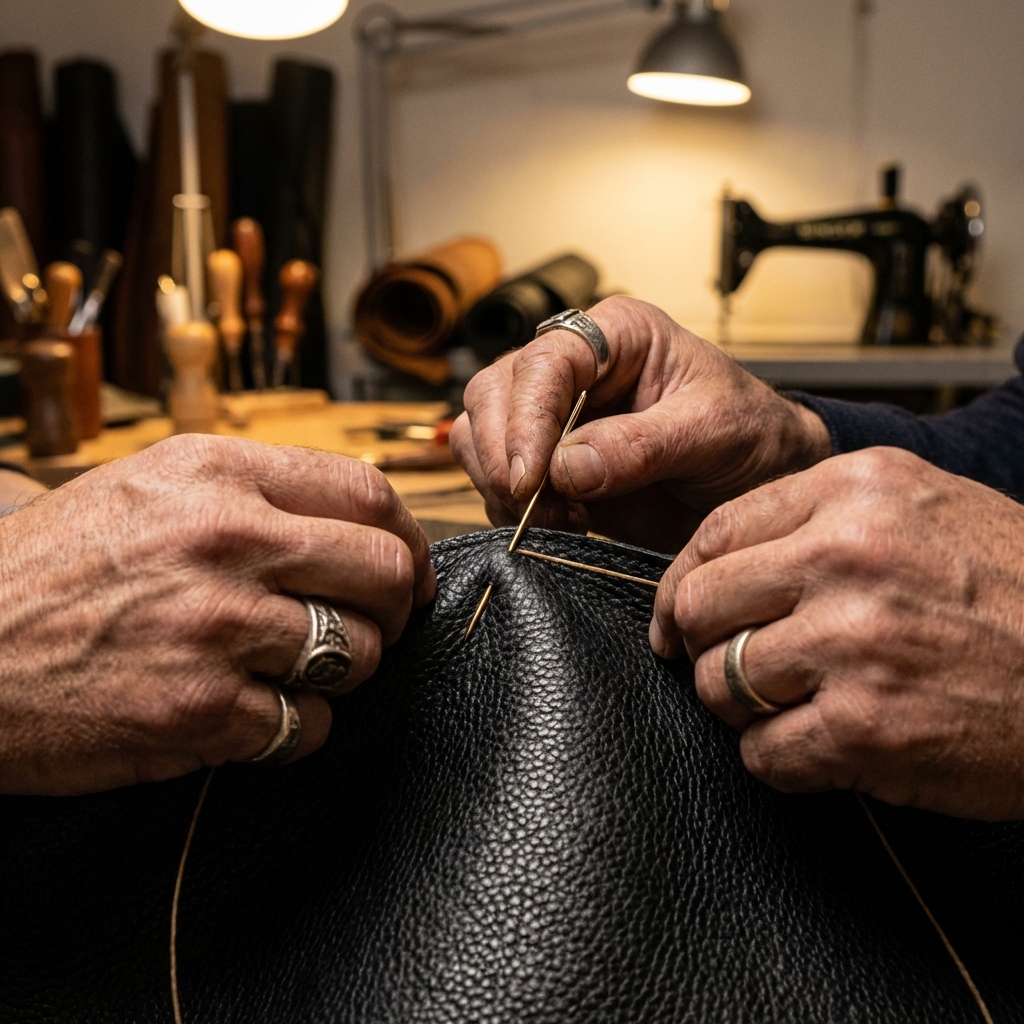
If Full-Grain is the rugged hunter of the leather world, Top-Grain is the polished aristocrat. It is the most common grade used by ultra-high-end fashion houses in Paris and Milan. Why? Because while Full-Grain is strong, it is also unpredictable. Top-Grain is for the designer who demands absolute visual consistency. In this guide, we demystify the "Top-Grain" process and explain why it might—or might not—be the right choice for your next purchase.
The Refinement Process: Sanding the Skin
Top-Grain leather starts as Full-Grain. However, if the hide has too many natural scars or imperfections to be used in a "flawless" designer bag, it undergoes a transformation:
- Sanding and Buffing: The top few millimeters of the grain are sanded down using precision industrial abrasives. This removes all "Nature's Fingerprints"—scars, wrinkles, and pores.
- The Finishing Coat: Because the natural protective layer is gone, a finishing coat (often a pigmented resin) is applied. This coat can be stamped with an imitation grain (like Saffiano or Epsom) to provide a uniform texture.
The Benefits of the 'Polished' Tier
1. Absolute Color Uniformity
In Full-Grain, the dye absorbs differently in different areas, leading to beautiful but inconsistent shading. In Top-Grain, the finishing coat ensures that every inch of the leather is the exact same Pantone shade. This is why luxury car interiors and high-street handbags utilize Top-Grain.
2. Increased Water and Stain Resistance
The resin coating acts as a shield. Spilled coffee or a light rain shower will "bead up" on Top-Grain, whereas it might soak into Full-Grain. For the urban commuter, this is a practical advantage.
3. Immediate Softness
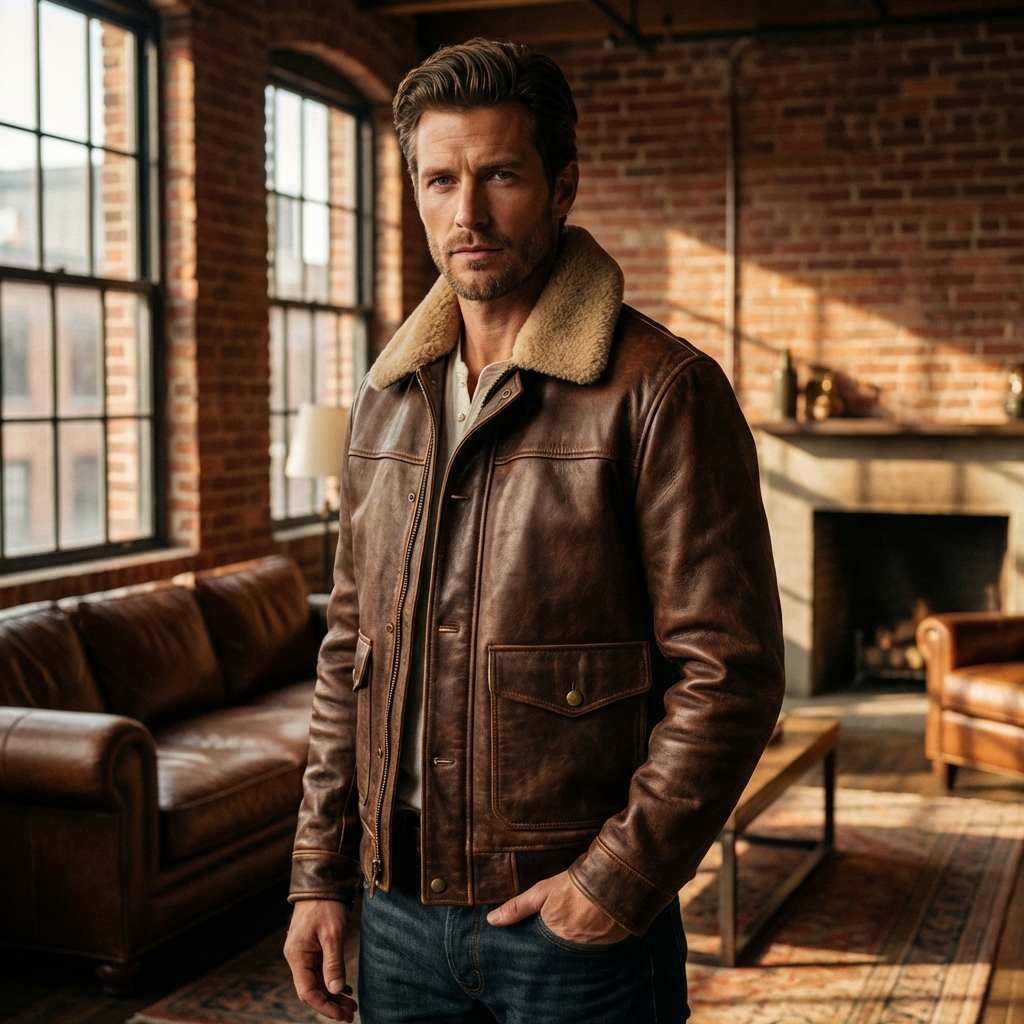
Removing the dense top-most fibers makes the leather more pliable "out of the box." You don't have to "fight" a Top-Grain jacket; it drapes beautifully from Day 1.
The Hidden Trade-Offs
There is no such thing as a free lunch in material science. By sanding the grain, we lose two things:
- Structural Integrity: By removing the densest fibers, Top-Grain is roughly 20-30% less "tough" than Full-Grain. It can stretch over time if subjected to high tension.
- Patina Potential: The resin shield prevents the leather from absorbing oils. Top-Grain will look the same on Day 1000 as it did on Day 1. It doesn't "age"; it simply "wears out" over 10-15 years.
The IndiFash Verdict: When do we use Top-Grain?
We believe in the Right Material for the Right Purpose.
- For our Rugged Riders: We use 100% Full-Grain.
- For our Evening Blazers and Suede-Finishers: we utilize the highest-grade Top-Grain to achieve that buttery, red-carpet smoothness that our clients demand.
Comparison: The Visual Vibe
| Attribute | Top-Grain | Full-Grain |
|---|---|---|
| Surface | Sanded / Buffed / Uniform | Natural / Rugged / Pored |
| Friction Resistance | Moderate (Finish can chip) | High (Fiber based) |
Conclusion
Top-Grain is not "bad" leather; it is "refurbished" leather. It is perfect for those who value clean lines, vibrant colors, and instant comfort. However, if you are looking for a jacket to pass down to your grandchildren, the IndiFash Full-Grain series remains the superior biological choice.
Decide your aesthetic. View the IndiFash Bespoke Suede & Top-Grain Series.