
Sensory Analysis: How to Spot a Fake Leather Jacket in 2026
The War of the Textures
In 2026, the market is flooded with high-end synthetics marketed as "Plant-Based" or "Vegan Leather." While these materials have their place, they are often used to deceive consumers into paying premium prices for what is essentially polyurethane (PU). To the untrained eye, a $400 plastic jacket can look remarkably like a $400 lambskin hide. However, nature cannot be perfectly replicated by a machine. At IndiFash, we believe in Material Transparency. Here is the sensory protocol for identifying a genuine leather garment.
1. The Olfactory Signature (The Smell Test)
Smell is the hardest sense to deceive.
- The Real Deal: Genuine leather has a rich, earthy, and slightly sweet scent derived from the tanning process (oaks, barks, and natural fats). This scent is persistent and becomes better as the jacket breathes.
- The Fake: Synthetics have a "Volatile Organic Compound" (VOC) smell. It is sharp, chemical, and reminiscent of glue, acetone, or new shower curtains. Even if manufacturers add "leather scent" sprays, they fade within weeks, leaving behind the underlying plastic odor.
2. Topographical Irregularity (The Vision Test)
Machines produce patterns; nature produces anomalies.
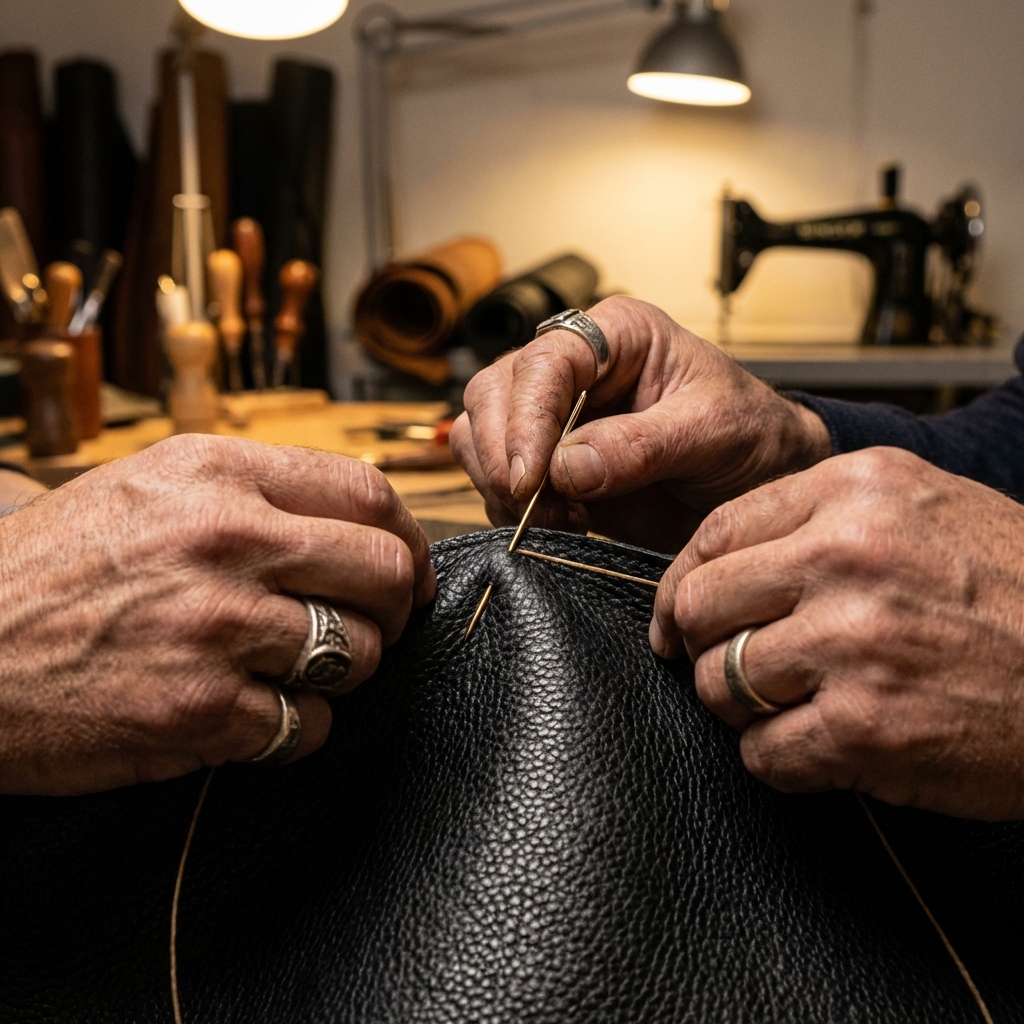
- The Grain: Use a magnifying glass or your phone's macro lens. Real leather (Full Grain or Top Grain) has Irregular Pore Distribution. You should see tiny hair follicles that vary in size and spacing.
- The Repetition: Faux leather is stamped with a roller. If you see the exact same pebble or wrinkle pattern repeat every 6 inches, it is 100% synthetic. Real skin never repeats.
3. The Thermal Transfer (The Touch Test)
Leather is an insulator; plastic is a conductor.
- The Warmth: Real leather will reach your body temperature within seconds of contact. It feels "supple" and slightly moist (due to natural oils).
- The Cold: Faux leather feels "cold" to the touch and stays cold longer. It also feels "rubbery" or "squeaky" when you run your fingers across it.
4. The Edge Anatomy
Check the "Raw" edges often found inside pockets or near the hem.
- Fibrous vs. Layered: Real leather is a single, dense mass of interlaced fibers (suede-like on the back). Faux leather is a "Sandwich"—a top layer of plastic glued to a bottom layer of fabric or mesh. If you see a fabric backing, it is not leather.
Authenticity Comparison Matrix
| Test | Genuine Leather | Faux / 'Vegan' Leather |
|---|---|---|
| The Fire Test | Slightly chars, smells like burning hair | Melts, smells like burning plastic |
| The Water Test | Absorbs (unless treated) | Beads and rolls off |
| The Scratch Test | Leaves a temporary mark (Patina) | Highly resistant or peels permanently |
Conclusion
Knowledge is the best defense against overpaying for inferior materials. While faux leather has improved, it remains a short-term product. An IndiFash genuine hide is a biological masterpiece that respects your senses. Don't just look at the label—feel the grain, smell the heritage, and trust your instincts.
Buy with confidence. Explore our Full-Grain Certified Collection.
You Might Also Like
The Hidden Engineering: Why Quality Leather Costs More
Read Article
The Circular Hide: Is Leather More Sustainable Than Plastic?
Read Article